 Padua City Guide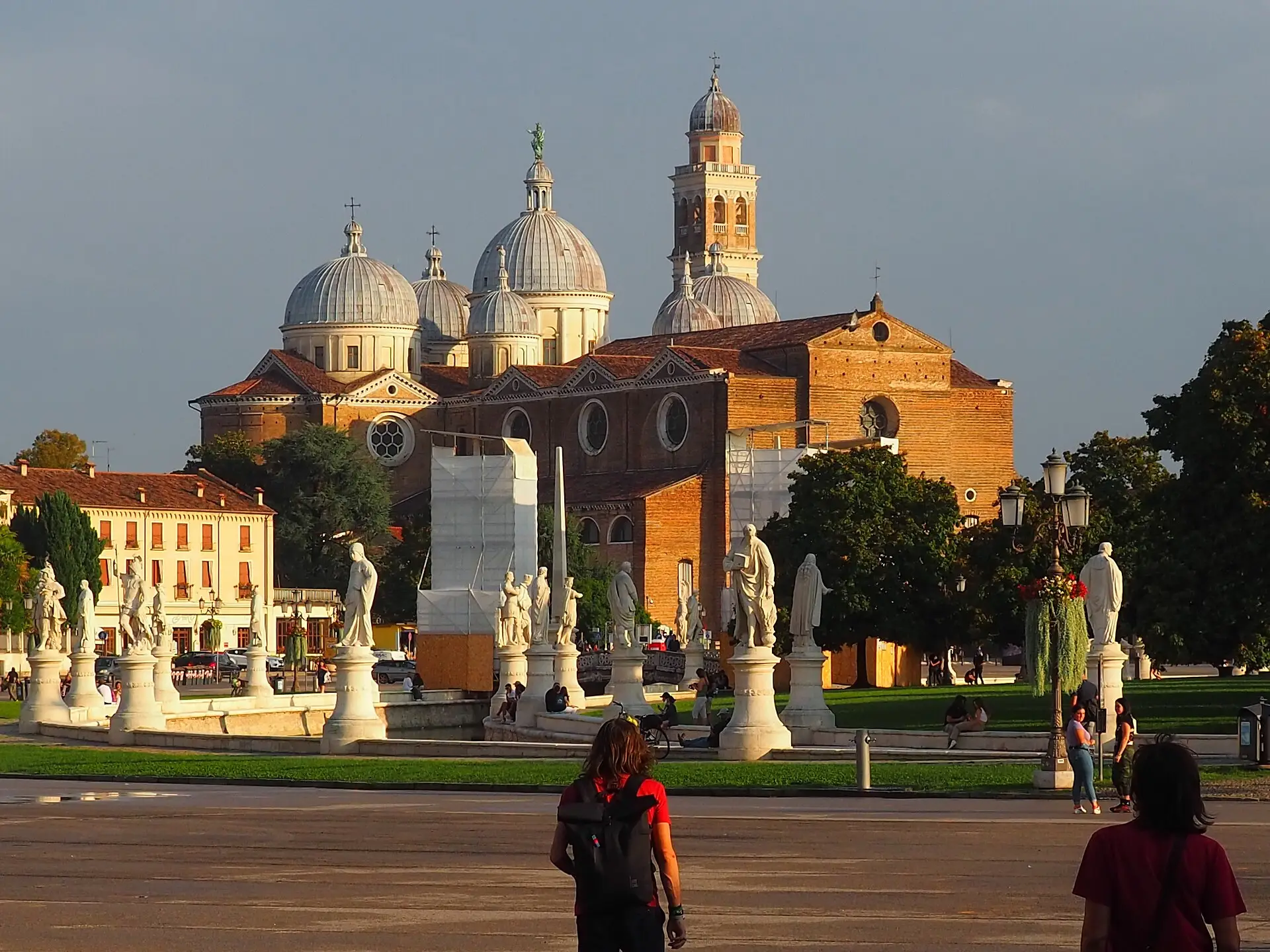
The prato della valle is the largest square in Italy — around 90,000 square metres of it — and the least square-shaped one you will ever walk: a vast ellipse of grass and paving ringed by a shallow canal, crossed by four bridges and centred on the Isola Memmia, an island lined with the 78 statues of illustrious figures commissioned for its making. The site began as Roman ground — theatre remains still surface around its edges — spent centuries as an open field beyond the walls, with records from the sixteenth century describing jousts and festivities there, and between 1767 and 1784 was transformed from a marshy meadow on the initiative of the Venetian senator Andrea Memmo, to the design of the architect Domenico Cerato. Today it is free, open around the clock, and functions as Padua's collective backyard: runners on the ring path, students on the island's lawns, markets and concerts on the paving, and the abbey of Santa Giustina closing the southern rim. This page covers the history, the statue programme and the practical business of using the square. The Basilica of Saint Anthony stands ten minutes north and the botanical garden on the eastern curve; everything else starts from the Padua City Guide homepage.
Quick answer Free access, the 78 statues, best light and events
Checked on 12 September 2026: Prato della Valle is free and open 24 hours a day, all year — it is a public square, not a ticketed monument. The ellipse measures around 90,000 square metres, making it the largest square in Italy, with a canal ring, four bridges and the Isola Memmia carrying its 78 commissioned statues. Nothing needs booking; the surrounding sights do — the botanical garden east of the square is ticketed, and the abbey of Santa Giustina on the southern rim keeps liturgical hours. Best light is early morning and sunset; a Christmas market occupies part of the square in the weeks before Christmas. Pair the visit with the Basilica of Saint Anthony ten minutes north for a half-day southern loop.
Key takeaways
- Free and open 24/7 — no ticket, no slot, no gates.
- Around 90,000 m², the largest square in Italy: elliptical, with a canal ring and four bridges.
- The Isola Memmia carries the 78 statues commissioned at the square's 1767-1784 remaking.
- Best light: early morning and sunset; December adds a Christmas market.
- One loop covers the square, the botanical garden and the abbey.
Key facts
Opening hours
| Public square, all year | 00:00–24:00 |
|---|
Closed Never closed — the square is public open space, day and night, all year
Admission
- Adult
- Free
- Reduced
- Free
- Free
- Everything in the square is free — canal walk, bridges, statue island and green space
Planning it
- Time needed
- 20-30 minutes to walk the ring; an hour with the abbey and the garden
- Address
- Prato della Valle, 35123 Padova
From Roman ground to drained marsh: the making of the square
The ellipse is eighteenth-century, but the ground is much older. The area sat just outside the Roman city's walls, and remains of the theatre district — foundations, fragments, and the sense of a curve in the underlying plan — still surface in and around the site. Through the medieval centuries the space was simply the prato, the field by the city: open grass where the records from the sixteenth century place jousts, festivals and public spectacles, and where the river's habits kept the ground damp enough to qualify, on maps and in complaints, as a marsh.
The transformation that made the modern square ran from 1767 to 1784, on the initiative of Andrea Memmo — a Venetian patrician with strong Paduan connections — and to the design of the architect Domenico Cerato. The plan was radical and economical at once: drain and level the field, cut an elliptical canal around its rim, bury the bank walls in stone, and raise a central island — named Isola Memmia after the patron — encircled by water and lined with statuary. The 78 statues of illustrious figures tied to the city's history were commissioned for the island, funded by subscription from Paduan families who paid for the privilege of honouring their own; with later additions, some counts of the statuary reach 87, though the 78 commissioned figures remain the programme's core. Around the rim, the neo-Gothic Loggia Amulea marks the western edge, and the enormous mass of the abbey of Santa Giustina closes the southern view — the backdrop that makes every photograph of the canal read instantly as Padua.
- Roman era: the site lies outside the walls, near the theatre district; remains surface around the square.
- Middle ages-18th century: open field and occasional marsh — jousts and festivities in the sixteenth century.
- 1767-1784: drainage and rebuilding on Andrea Memmo's initiative, to Domenico Cerato's design.
- Isola Memmia: the central island, ringed by canal water and the 78 commissioned statues.
- Today: public square with markets, events, a running loop and the Christmas market in December.
Using the square: light, loops, markets and events
The square rewards repetition more than inspection. Walk the canal ring once for the statues — each figure stands on its pedestal with an inscription naming a jurist, scientist, captain or churchman worth a moment's reading — then cross one of the four bridges onto the island and sit down, because the view outward, with the water on both sides and the abbey's brick mass behind, is the composition. Photographers should aim for the low light: morning mist off the canal in the cooler months, and a long gold hour across the western paving in summer. The flat, traffic-free ring path makes the square the city's default running and cycling circuit, busiest between 7:00 and 9:00, and stroller-friendly at every hour.
The event calendar is seasonal but real: a Christmas market occupies part of the square in the weeks before December (dates are announced by the city each year), open-air concerts and temporary installations use the paving in the warm months, and the weekly rhythms of markets and fairs are posted on the city's tourism site. The canal itself is ornamental — no boating, no swimming; the city periodically drains and cleans it. Food is easier inside the surrounding streets than on the square, so plan the aperitivo for the lanes towards the Santo quarter or the centre, and keep the square for the walk between them.
- Walk the ring once for the statues, then cross a bridge and take the island view outward.
- Best light: early morning and sunset; the ring path is the city's main running loop.
- Christmas market in December; concerts and events on the paving in summer.
- Canal etiquette: ornamental water — no boating or swimming.
- Eat in the lanes around the square, not on it — see where to eat.
There is no ticket for the square itself — every option below is either free directly or a guided walk from our catalogue. Event and market information follows the city tourism board (turismopadova.it), checked on 12 September 2026.
Just walk in — the square is free at every hour; pay only if you add the guided tour or the ticketed garden next door.
| Option | What it covers | Price | Booking | Book |
|---|---|---|---|---|
| Prato della ValleEveryone | The whole ellipse: canal ring, bridges, Isola Memmia and its 78 statues | Free, 24/7 | City tourism board | Official site |
| Small-group walking tour across Prato della ValleFirst-time visitors | See tour card for departures | See tour card | Check Availability | Check Availability |
| Golf cart tour including the southern loopTired feet, big ground | See tour card | See tour card | Check Availability | Check Availability |
Padua's four great squares compared
None of the four costs anything to stand in, but they behave very differently across the day; the roles and timings below come from the city's own tourism information and our on-the-ground notes, checked on 12 September 2026.
| Square | Role | Cost | Best time |
|---|---|---|---|
| Prato della Valle (this page) | Monumental esplanade: statues, canal, lawns; markets, concerts and the December Christmas market | Free, 24/7 | Early morning and sunset |
| Piazza delle Erbe | Daily produce market under the arcades of the great hall | Free; the Salone upstairs is ticketed | Weekday mornings, 7:30-13:00 |
| Piazza dei Signori | The elegant civic living room: clock tower, loggias, cafe tables | Free; tower visits free by donation | Evening aperitivo hour |
| Piazza delle Frutti | The market's second stage, ringed by permanent food shops | Free | Weekday mornings |
The Isola Memmia and its canal ring at sunset — 78 statues, four bridges and the abbey's brick mass behind.
Prato della Valle and the southern loop on the map
The square sits at the centre of Padua's southern cluster. The pins trace a single loop: square, island, loggia, abbey, basilica and garden.
Guided tours that cross Prato della Valle
The square needs no guide, but its statues and the surrounding monuments do — these catalogue departures put the southern loop in context.
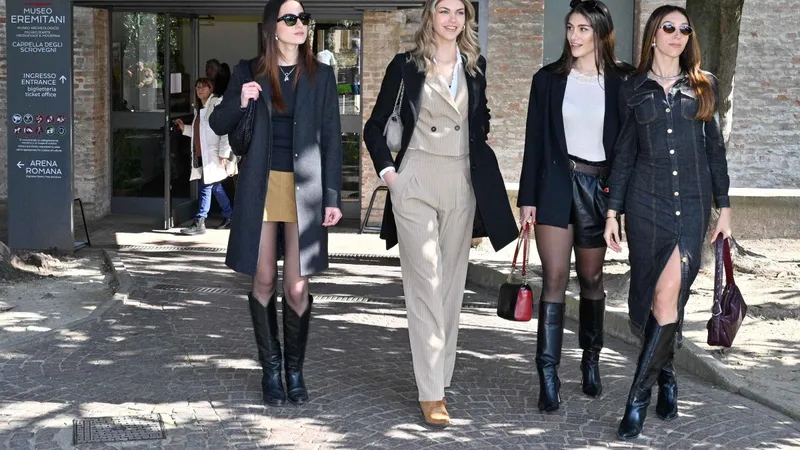 from $69.61
Padua: Small-group walking tour with the Scrovegni Chapel
Best value: the slot and the fresco context in one booking
Check Availability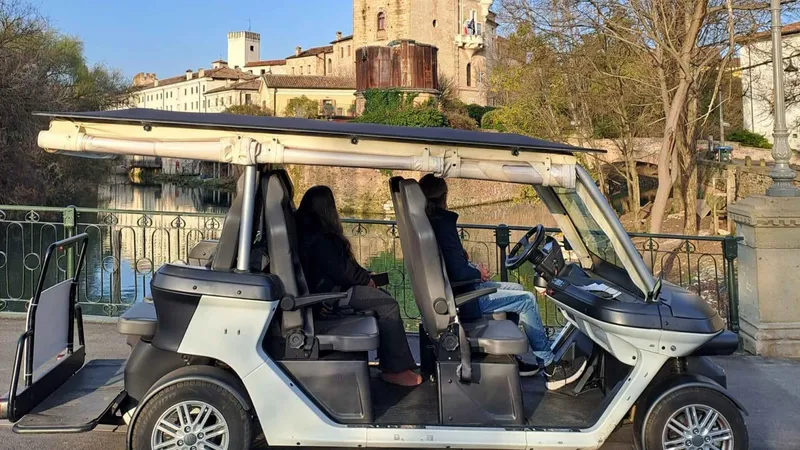 from $61.49
Prices, ratings and details are the platform's own, checked in Q3 2026; dollar figures are the listed prices — the platform bills in your account's currency.
Frequently asked questions about Prato della Valle
Is Prato della Valle free to visit?
Yes — completely. The square is public open space, free at every hour of the day and night, with no ticket, gate or slot. The only ticketed sights around it are the botanical garden on the eastern curve and the events that occasionally charge for seating or access to special installations.
Why is it called the largest square in Italy?
Because at around 90,000 square metres it beats every other Italian piazza by area — and it manages it as an ellipse with a canal rather than a conventional paved rectangle. Rival claims for other squares generally count built enclosure; by the common measure, the prato wins.
Who are the 78 statues on the island?
Illustrious figures tied to Padua's history — jurists, scientists, captains, churchmen and writers — commissioned when Andrea Memmo's 1767-1784 remaking of the square created the Isola Memmia, and funded by subscription from local families who paid to honour their own. With later additions, counts of the statuary sometimes reach 87, but the 78 commissioned figures are the core.
When is the Christmas market on the square?
In the weeks before Christmas, typically through December into early January, with wooden stalls along part of the rim. The city announces exact dates and hours each year on its tourism site, so check turismopadova.it if your trip hinges on it.
What is the best time of day to see Prato della Valle?
Early morning for mist over the canal and the runners' circuit, sunset for the long light across the western paving, and evening for the sociable sprawl. Midday in high summer is the one window to avoid — the square is open ground with almost no shade.
How do I get to the square from the station or the centre?
On foot it is roughly a 20-minute walk from the railway station through the centre, or a short city bus ride to the stops around the square — the routing options are in our getting around guide. Cars park at the square's perimeter lots; the ring path itself is traffic-free.
Can you boat or swim in the canal?
No. The canal ring is ornamental water — shallow, unmotorised and periodically drained by the city for cleaning. Its role is scenic: four bridges cross it, statues line it, and its surface doubles the square's best photographs.
What to visit near Prato della Valle
The square anchors the southern sightseeing cluster — nothing here is more than ten minutes from a bridge:
Basilica of Saint Anthony
The pilgrimage basilica with the tomb of St Anthony and Donatello's bronzes, ten minutes north.
Botanical garden
The UNESCO garden of 1545 on the square's eastern curve — ticketed, timed entries in season.
Abbey of Santa Giustina
The colossal free abbey church with St Luke's tomb, on the square's southern rim.
Colli Euganei
Volcanic hills and spa towns south of the city — the natural half-day add-on.
Padua with kids
Family planning: the island lawns, the garden's greenhouses and the market ritual.
Reviewed Q3 2026 (July–September 2026); next review Q4 2026. Prices, hours and terms are set by the venue or operator and confirmed at checkout.
We may earn a commission if you book through one of our links, at no extra cost to you. Full affiliate disclosure