 Padua City Guide
The padua card — sold as the Padova Urbs Picta Card — is the city's one official sightseeing pass, and it is built around the fresco cycles that won Padua its 2021 UNESCO inscription: one entry to each of the eight Urbs Picta sites, including the chapel, the great hall over the market squares and the Baptistery, plus unlimited city public transport for the card's duration. At €28 for 48 hours and €35 for 72 hours it is neither an automatic saving nor a tourist trap — the answer depends on how many of the covered sites you will actually enter and how much you will ride. This page sets out the coverage, the collection points at the IAT offices, the activation mechanics and the full break-even arithmetic against single tickets, checked on 12 September 2026. If you want a second opinion, the dedicated post is the pass worth it argues the same numbers from the traveller's side. The wider city directory and travel planner starts on the Padua City Guide homepage.
Quick answer Prices, coverage and when the pass pays
Checked on 12 September 2026: the card costs €28 for 48 hours or €35 for 72 hours, covers one entry to each of the eight UNESCO Urbs Picta fresco sites — the chapel, Palazzo della Ragione, the Baptistery and the Eremitani among them — and includes unlimited city public transport. The three most-visited covered sites bought singly cost €39 (€16 + €8 + €15), so the 48-hour card wins from the third covered site onward. It does not cover the botanical garden or the university tour. Buy at the IAT offices or online at turismopadova.it; the ticket mechanics sit in the tickets guide.
Key takeaways
- 48h €28 / 72h €35 — both include unlimited city public transport for the window.
- One entry per site at all 8 Urbs Picta sites; the chapel's 15-minute slot discipline still applies.
- Singles math: chapel €16 + great hall €8 + Baptistery combo €15 = €39 against the €28 card.
- Not covered: the botanical garden (€15), the university tour (€10) and the basilica's museum complex.
- Sold at IAT offices and online — collect and activate before your first site.
Official card tariffs as published on turismopadova.it and checked on 12 September 2026. The tour row is optional and its price sits on the tour card.
Buy the 48-hour card for a two-night stay, the 72-hour card only if day three keeps you in the museums.
| Option | Validity and coverage | Price | Where to buy | Book |
|---|---|---|---|---|
| Urbs Picta Card 48hStandard visitors | 48 hours; one entry per site at all 8 Urbs Picta sites; unlimited city transport | €28 | City tourism portal | Official site |
| Urbs Picta Card 72hLonger stays | 72 hours; same coverage as the 48-hour card | €35 | City tourism portal | Official site |
| Residents' cardPadua residents | Reduced rates for residents; qualifying categories on the official portal | Resident rate — see official portal | City tourism portal | Official site |
| Guided Tour of Giotto's Scrovegni ChapelVisitors who prefer guided commentary | Reserved slot with a specialist guide — an alternative to the card's self-guided entry | See tour card | Check Availability | Check Availability |
What the Urbs Picta Card actually covers
The card is named for the UNESCO inscription 'Padova Urbs Picta' (2021), which recognised the fourteenth-century fresco cycles spread across eight buildings in the city. The four names every itinerary uses are the Scrovegni Chapel, Palazzo della Ragione — the great hall above the market squares — the Baptistery of the Duomo with Menabuoi's frescoed dome, and the Church of the Eremitani; the remaining sites are the cycle's smaller rooms and oratories, listed in full on the official portal. One entry per site: you cannot repeat a visit within the window. The quiet economics favour the card on those smaller sites — the entries a singles-buyer always skips — so a cardholder who ducks into two of them on a rainy afternoon is spending money already sunk.
The transport half matters more than it looks. Unlimited city public transport for 48 or 72 hours covers the tram from the railway station into the centre and the buses across town, and removes every per-ride ticket decision. For a stay based outside the walls — see the where to stay districts across the ring — the transport alone can carry a meaningful share of the card's cost.
- Included: one entry to each of the 8 Urbs Picta fresco sites.
- Included: unlimited city public transport for the whole window.
- Not included: the botanical garden, the university tour and the basilica's museum complex.
- Chapel entries still run on 15-minute timed slots — fix the time when you activate.
Break-even math: the card versus buying singles
All figures come from the official tariffs checked on 12 September 2026. The first row is the full five-site basket a typical first-time visitor pays for; the rows after it show where the card genuinely wins and where it does not.
| Scenario | Cost buying singly | Card option | Verdict |
|---|---|---|---|
| Five headline singles: chapel €16 + great hall €8 + Baptistery €15 + botanical garden €15 + university tour €10 | €64 | 48h card €28 covers only the first three | Card saves €11 on the covered sites — transport and the remaining fresco rooms come on top |
| Three card-covered sites (chapel, great hall, Baptistery) | €39 | 48h card €28 | Card wins by €11 before counting a single tram ride |
| Chapel plus one other site | €16 + €8 = €24 | 48h card €28 | Buy singles — the card does not pay for itself |
| Two-day stay using buses and trams daily plus three or four sites | €39 and up, plus per-ride transport tickets | 48h card €28 | Card wins clearly, on tickets and convenience alike |
| Slow stay: one museum per day, mostly on foot | €8-€16 per site | 72h card €35 | Singles are cheaper unless transport use is heavy |
Who should buy — and who should not
Buy it if your stay is 48 or 72 hours, you will enter at least three covered sites, and your accommodation sits beyond walking distance of the centre — that combination makes the card win on both halves of its value. Skip it if you are in town for a single day with one paid visit in mind, or if your itinerary leans on the sites the card does not cover: the botanical garden, the university palace tour and the basilica's museum complex all sit outside it, and a day built around them plus the free sights leaves the card holding transport value only.
The 72-hour choice is not about padding: it exists for stays whose third day keeps the museum habit — chapel slot on day one, great hall and Baptistery on day two, the smaller fresco rooms and the Eremitani's Mantegna panels on day three. If day three is a train to Venice or Verona instead, the 72-hour card buys nothing the 48-hour card did not, and the €7 difference is better spent on the rail fare — the day trips pages carry those routes.
Activation and the chapel slot
The 48- or 72-hour window starts with the card's first use, not with purchase — so the sequencing rule is to activate at, or immediately before, your first covered site rather than at the station on arrival evening. The chapel keeps its own rhythm inside the card: its 15-minute timed slots still apply, so ask the IAT desk to fix the chapel time when you collect the card instead of hoping for walk-up space. Confirm the activation mechanics printed with your card — digital and physical versions behave slightly differently.
Where to collect
Two routes exist: buy online through turismopadova.it and collect, or buy directly at the IAT tourist offices — the central desk at Piazza delle Erbe 52 handles both sales and collections, which makes it the practical first stop of a card-based morning. Bring identification for reduced and resident rates.
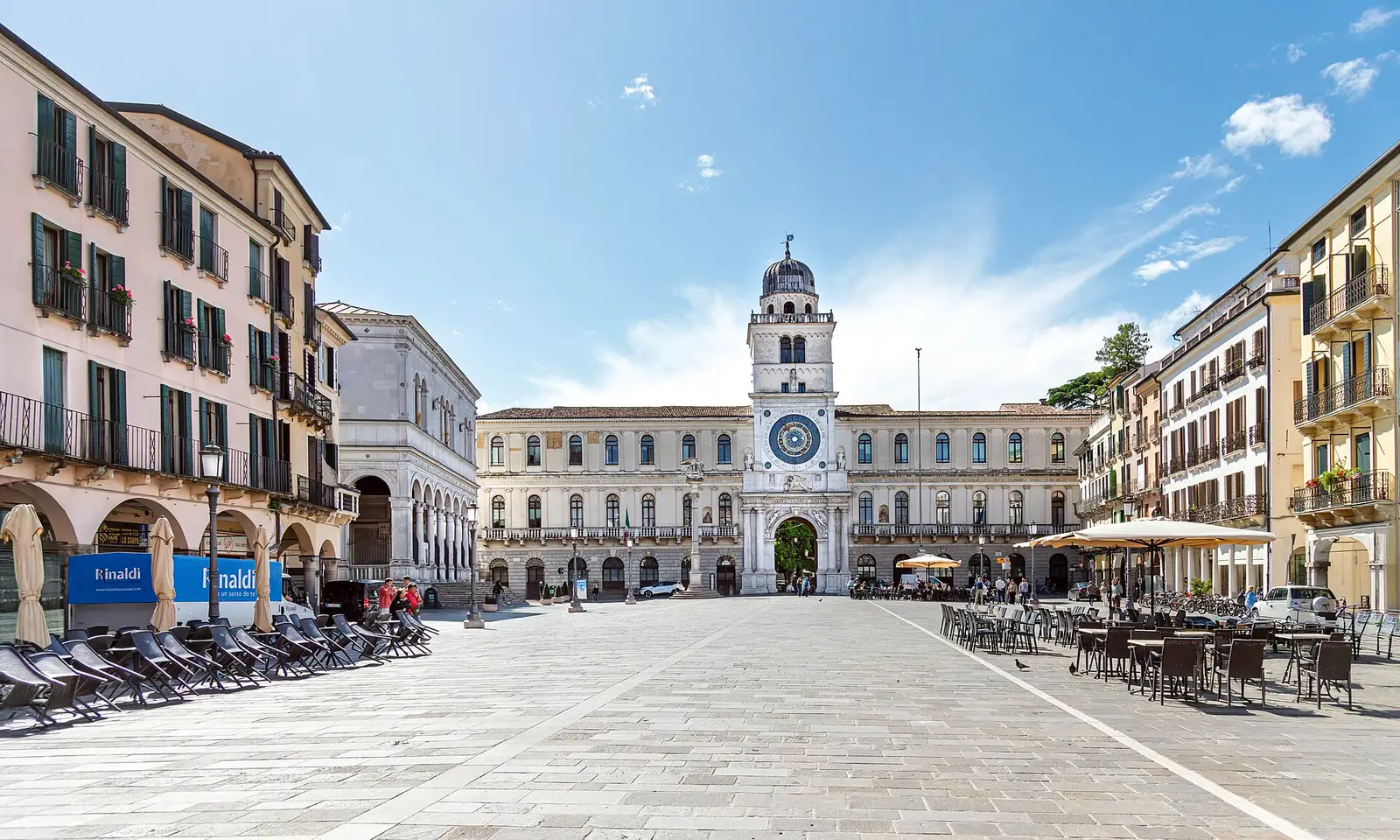
Card itineraries live in this square's orbit: the great hall, the clock tower and the market squares sit minutes apart.
Tours that pair well with the card
Guided walks and the pass answer different questions — one adds context, the other adds access — and they stack, provided you decide before booking whether the frescoes are the tour's job or the card's.
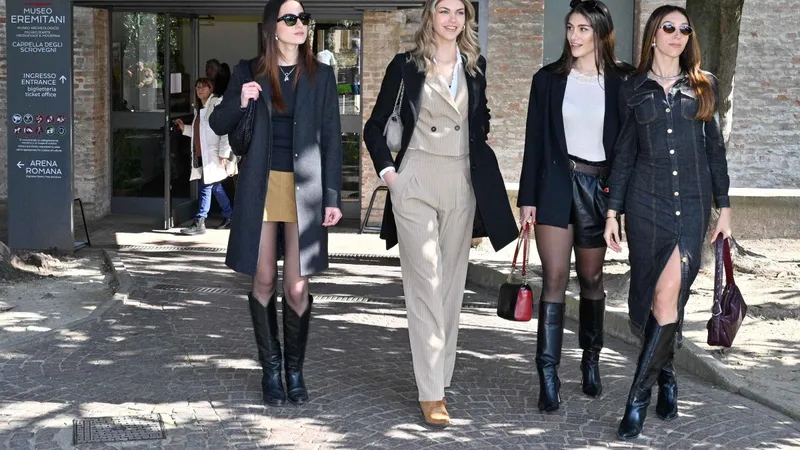 from $69.61
Padua: Small-group walking tour with the Scrovegni Chapel
Best value: the slot and the fresco context in one booking
Check Availability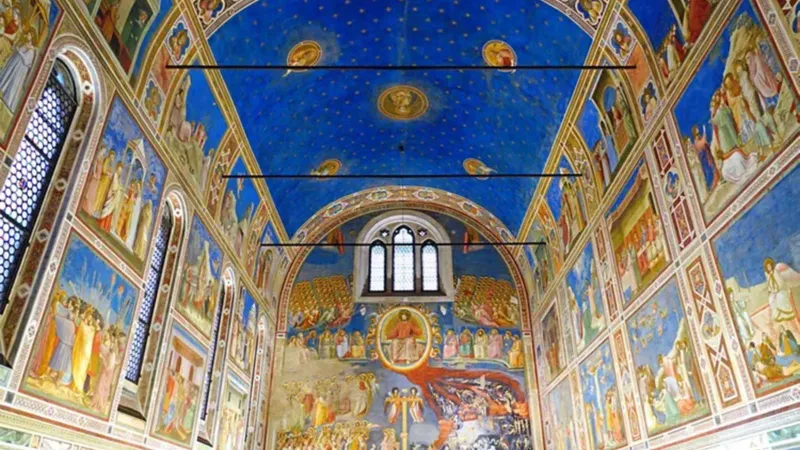 from $45.25
Guided Tour of Giotto's Scrovegni Chapel
The fresco deep-dive with the slot handled for you
Check AvailabilityPrices, ratings and details are the platform's own, checked in Q3 2026; dollar figures are the listed prices — the platform bills in your account's currency.
Padua Card questions, answered
Is the card worth it for a two-day visit?
Usually yes if you enter three or more covered sites and use transport. The three headline sites cost €39 singly against €28 for 48 hours, and every bus and tram ride inside the window is already paid. A two-day stay that skips the Baptistery or the smaller fresco rooms can still justify it on transport alone — run your own numbers on the is Padua Card worth it page.
Does the card include transport from the railway station?
Yes — unlimited city public transport covers the tram link from the station into the centre and the bus network across town for the whole 48- or 72-hour window.
Do I still need to reserve the chapel slot when using the card?
The 15-minute slot discipline applies regardless of how the entry is paid for, so fix the chapel time when you collect and activate the card at the IAT desk rather than arriving at the Eremitani entrance expecting walk-up access.
Does the card cover the botanical garden or the university tour?
No. Both sit outside the pass — the garden charges €15 (€12 in winter) and the university's weekday tour €10 — so budget them separately; the science sites sell their own combined ticket.
Where do I collect the card?
Either online at turismopadova.it with collection afterwards, or in person at the IAT tourist offices — the central desk at Piazza delle Erbe 52 sells and collects in the same queue.
What does '8 UNESCO sites' mean exactly?
The card is named for the 2021 UNESCO inscription of Padua's fourteenth-century fresco cycles, which span eight buildings: the four headline sites (chapel, great hall, Baptistery, Eremitani) plus the smaller rooms and oratories listed on the official portal. One entry each.
Can two people share one card?
No — cards are issued per person and checked at entry, so each traveller needs their own. Children's and resident categories follow the rules published on the official portal.
Is there a residents' rate?
Yes — the card carries reduced rates for Padua residents, published on the official portal and checked at purchase with identification. Tourists buy at the standard €28 and €35 tariffs.
When does the 72-hour card pay off instead of the 48-hour one?
Only when a third full day keeps you inside the covered sites: the €7 step-up buys twenty-four extra hours of entries and transport, so a third museum day covers it, while a day spent in Venice, Verona or the Euganean hills recovers nothing. Plan the window around your museum days, not your day trips.
Card-related pages
The pass in context, with the alternatives and the sights it opens:
Scrovegni Chapel tickets
The single-slot mechanics the card's chapel entry must fit into.
Tickets
Every official admission price and the box-office map.
Is Padua Card worth it?
The dedicated verdict post, argued from real itineraries.
Things to do
The full sight list, covered and uncovered alike.
Reviewed Q3 2026 (July–September 2026); next review Q4 2026. Prices, hours and terms are set by the venue or operator and confirmed at checkout.
We may earn a commission if you book through one of our links, at no extra cost to you. Full affiliate disclosure