 Padua City Guide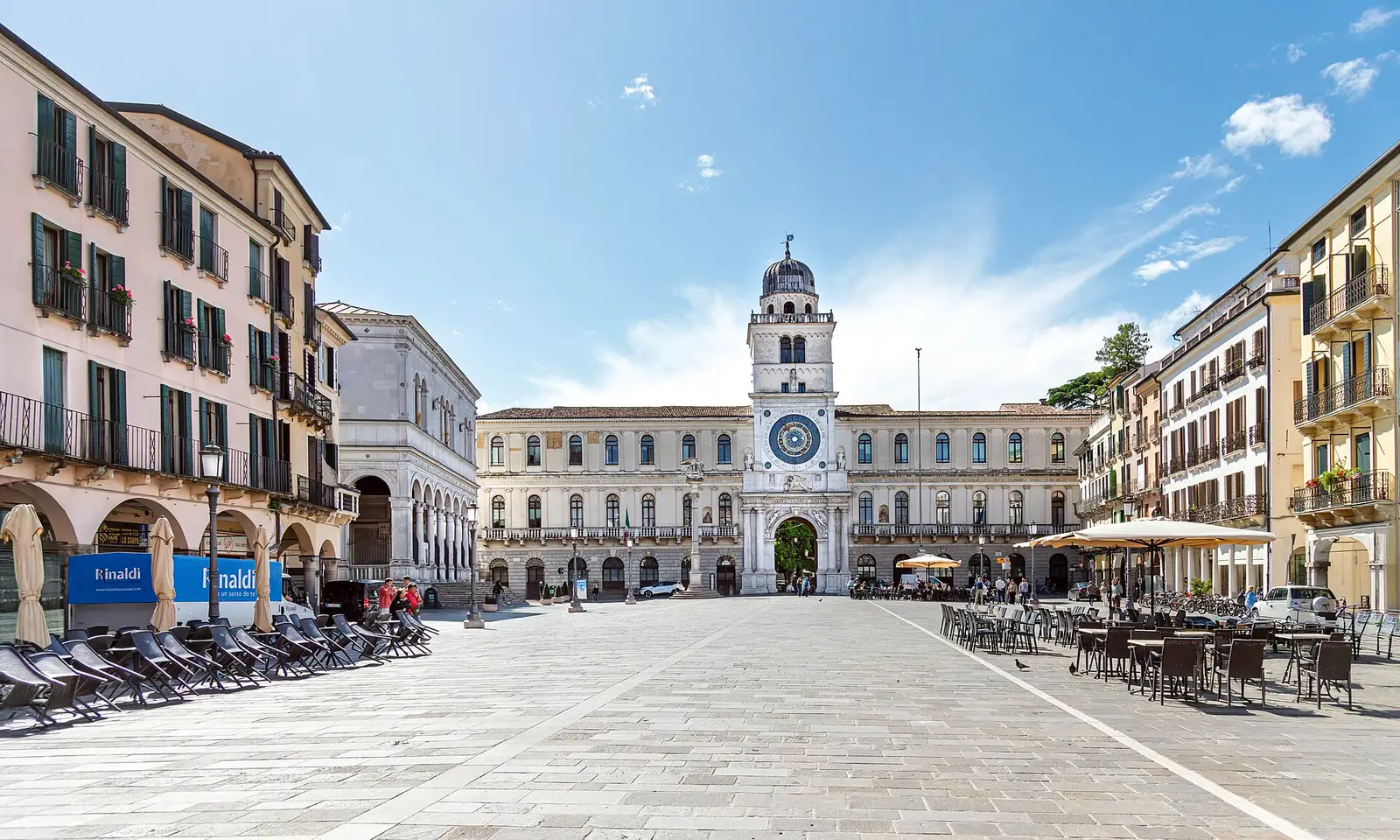
The square most searches call piazza dei signori padua is the city's most composed public space: a rectangle of pale stone pavement enclosed entirely by buildings, with no church and no market to break the order — the thirteenth-century Palazzo del Podestà, the Palazzo del Capitanio with its lion gate, the Renaissance Loggia del Consiglio (known to Paduans as the Loggia della Gran Guardia), and the tower that houses Jacopo Dondi's astronomical clock, whose mechanism was completed in 1344. This was the seat of civic power for centuries, and it still behaves like it: cafe tables at the edges, the clock overhead marking a 24-hour dial with the zodiac and the moon, and — on the column at the corner — the little figure of the Ghebelotto, which new graduates climb in one of the university's oldest rites. Dante is recorded in Padua in the early fourteenth century, and it is this square that his contemporaries would have known best. The tower itself is free to visit, by donation, with volunteer guides at fixed times and booked places — the mechanics are below. The market arcades of Piazza delle Erbe begin at the next corner and Caffè Pedrocchi ends the block; everything else is on the Padua City Guide homepage.
Quick answer Free square, donation-only tower visits, the clock and the graduation column
Checked on 12 September 2026: the square is free and open at all hours. The Torre dell'Orologio — the fifteenth-century tower housing Jacopo Dondi's astronomical clock of 1344 — is visited free of charge with a voluntary donation, at fixed times on scheduled days, with volunteer guides and required booking by email to [email protected]. Visits do not run every day, so email ahead rather than turning up. Around the square: the Palazzo del Podestà, the Palazzo del Capitanio with its lion gate, the Loggia del Consiglio, and the university's Liviano wing. The clock's dial combines a 24-hour ring, the zodiac and a moon ball. Continue to the market arcades of Piazza delle Erbe next door, then coffee or the historic cafe circuit — or hand the quarter to a guided walking tour.
Key takeaways
- The square is free and open 24/7 — the buildings do the work.
- Torre dell'Orologio visits are free with a voluntary donation, at fixed times with volunteer guides.
- Booking is required for the tower and visits are not daily — email [email protected].
- The clock of 1344 by Jacopo Dondi reads a 24-hour dial with zodiac ring and moon ball.
- Look for the Ghebelotto on the column — climbing it is the graduates' rite, still practised.
Key facts
Opening hours
| Public square, all year | 00:00–24:00 |
|---|
Closed Square never closed; the Torre dell'Orologio interior opens only on scheduled days at fixed times with volunteer guides — visits do not run daily, and booking is required by email to [email protected]
Admission
- Adult
- Square free; Torre dell'Orologio visits free with a voluntary donation
- Reduced
- Free (voluntary donation to the volunteer association)
- Free
- No ticket exists for either square or tower — donations support the guides
Planning it
- Time needed
- 30-45 minutes for the square; about 30 more for a tower visit
- Book ahead
- Optional — walk-up usually fine
- Address
- Piazza dei Signori, 35139 Padova
The square of the lords: power, loggias and Dante
Piazza dei Signori took its shape from the institutions that ruled the city. On its north side stands the Palazzo del Podestà, the residence and seat of the podestà — the chief magistrate the communes hired from outside — begun in the thirteenth century and altered many times since. Opposite, the Palazzo del Capitanio grew around the offices of the capitano, the military counterpart, and its entrance arch carries the winged lion of St Mark, the Venetian Republic's stamp on the city after 1405. Between them, the Loggia del Consiglio — the elegant Renaissance loggia of the late fifteenth and early sixteenth centuries, with its row of statues above the arches — was built for the city council and is still called the Gran Guardia by locals.
The university's presence rounds the east side: the Liviano, the law faculty's mid-twentieth-century building raised to a design associated with Gio Ponti, links the square to the Sala dei Giganti, the frescoed university hall next door. The pavement itself is part of the composition — pale stone laid in rings centred on the tower — and the whole rectangle reads as an outdoor room rather than a square. Dante belongs to this room's history: the poet is recorded in Padua in the early years of the fourteenth century, at exactly the moment the city's institutions were consolidating here, and while no one can point to a bench he sat on, the Inferno's barbs at Paduan families were written with this city in his working memory. Keep the claim at that level of confidence and the square tells its story plainly.
- Palazzo del Podestà: thirteenth-century seat of the chief magistrate, north side.
- Palazzo del Capitanio: military governor's seat with the winged-lion gate, Venetian stamp after 1405.
- Loggia del Consiglio: Renaissance council loggia of the late 1400s-early 1500s, the 'Gran Guardia'.
- Liviano and Sala dei Giganti: the university's law wing and frescoed hall on the east side.
- Pavement: pale stone laid in rings around the tower's base — the square's hidden signature.
Torre dell'Orologio: the astronomical clock and how to visit it
The tower is fifteenth-century, but the reason it exists is older: the astronomical clock that Jacopo Dondi completed in 1344, one of the earliest of its kind in Europe, built at a moment when Padua's medical and astronomical faculties were among the most advanced anywhere. The mechanism and the dial have been repaired, replaced and reinterpreted across six centuries, and the tower suffered damage in the Second World War, so what you see today is a post-war restoration wearing a medieval idea — phrase it that way and you will never be wrong. The dial still does its original jobs: a single 24-hour ring counting the day the old Italian way, the zodiac ring tracking the sun's place among the signs, and the moon ball rolling through its phases on the rotating sphere.
Visiting the interior works differently from every other sight in this guide: the tower opens at fixed times on scheduled days only, always with volunteer guides from the local civic-heritage association, and admission is free with a voluntary donation. Places per visit are few and visits do not run daily — booking is required, by email to [email protected], and replies take a day or two, so write before you arrive in Padua rather than after. The visit climbs a narrow stair to the level of the dial, with the mechanism close enough to touch the logic of it, and the guide's explanation is what turns a clock face into a piece of fourteenth-century astronomy. Pair it with the column at the square's corner: the little capital figure known as the Ghebelotto, whose smooth polished shoulders come from generations of new graduates climbing up for luck — a rite the university's modern graduates still keep, alongside the rituals catalogued on our university page.
- 1344: Jacopo Dondi completes the astronomical clock — the tower is raised in the fifteenth century to house it.
- The dial: 24-hour ring, zodiac ring, moon-phase ball; much of the current face reflects post-war restoration.
- Visits: free with voluntary donation, fixed times, volunteer guides, booking required.
- Book by email: [email protected] — visits are not daily and places are few.
- The Ghebelotto: the column-capital figure graduates climb for luck — look, and you will see the wear.
Nothing on this square is ticketed: the piazza is free at all hours and the Torre dell'Orologio opens only through the volunteer-guided visits described below. Information follows the city tourism board and the volunteer association's booking address, checked on 12 September 2026; tour rows are optional guided walks from our catalogue.
Email [email protected] for the tower before your trip; walk the square and its loggias free at any hour meanwhile.
| Option | What it covers | Price | Booking | Book |
|---|---|---|---|---|
| Torre dell'Orologio guided visitEveryone | Narrow-stair climb to the dial with a volunteer guide; mechanism and clock-face explanation | Free — voluntary donation | Email [email protected]; fixed times, scheduled days only | Official site |
| Piazza dei Signori and the surrounding palazziEveryone | The square, the Podestà and Capitanio facades, the Loggia del Consiglio — all exteriors | Free, 24/7 | No booking needed | Official site |
| Small-group walking tour of the squaresFirst-time visitors | See tour card for departures | See tour card | Check Availability | Check Availability |
| Historic walking tour with tastings at the historic cafe next to the squareHistory and food readers | See tour card | See tour card | Check Availability | Check Availability |
The clock dial explained, feature by feature
The dial is a compact astronomy course, and it repays a slow look before you climb. The readings below describe the dial as restored after Second World War damage, following the city's own interpretive material, checked on 12 September 2026.
| Feature | What it shows | How to read it |
|---|---|---|
| 24-hour ring | The whole day in one rotation, counted in the old Italian manner | Follow the single hour hand around; noon and midnight sit opposite each other |
| Zodiac ring | The sun's position among the twelve signs through the year | Find the sun marker against the ring; it advances about one sign a month |
| Moon ball | The moon's phase on a rotating half-gilt sphere | Gilt side visible = full moon towards you; dark side = new |
| Hands and pointers | Solar time and the astronomical housekeeping behind it | Remember the dial counts 24 hours — late-afternoon light can disagree with your phone |
| The face itself | A post-war restoration of a 1344 concept | Read the tower as a medieval idea maintained, not an untouched original |
The tower over Piazza dei Signori: fifteenth-century masonry housing the astronomical clock of 1344.
Piazza dei Signori and its buildings on the map
The square sits at the hinge between the market squares, the cathedral quarter and the cafe district. Pins mark every facade mentioned above plus the practical stops.
Guided tours around the civic square
The tower visit covers the clock, but the square's institutions — podestà, captain, council, university — need a narrator. These catalogue departures supply one.
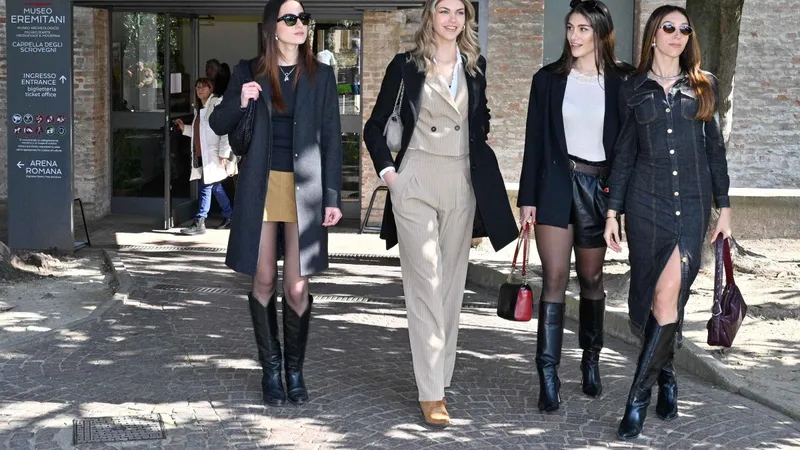 from $69.61
Padua: Small-group walking tour with the Scrovegni Chapel
Best value: the slot and the fresco context in one booking
Check Availability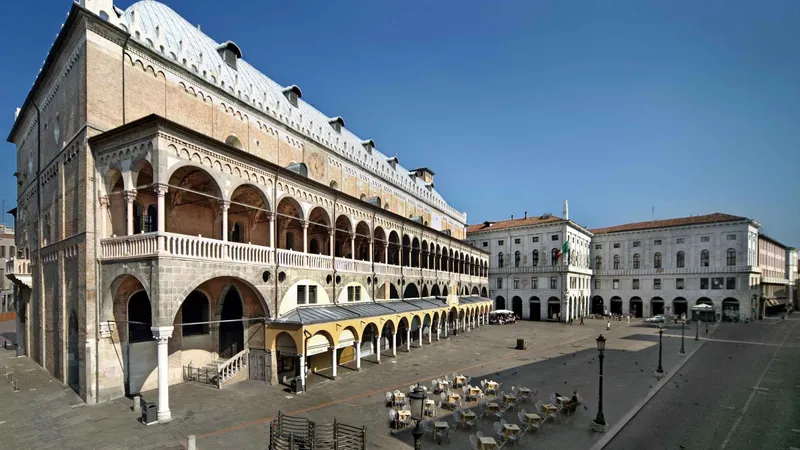 from $103.26
Padua: Historic Walking Tour and Tastings at Caffè Pedrocchi
History first, then the 1831 café with a reserved table
Check AvailabilityPrices, ratings and details are the platform's own, checked in Q3 2026; dollar figures are the listed prices — the platform bills in your account's currency.
Frequently asked questions about Piazza dei Signori
How do I visit the Torre dell'Orologio?
By booked visit only: email [email protected] and request a slot — the volunteer association runs visits at fixed times on scheduled days, with a guide and a small number of places each time. Replies can take a day or two, so write well before your trip. The climb is a narrow stair, not suitable for anyone with serious mobility limits.
Is the clock tower visit really free?
Yes — there is no ticket. Admission is free with a voluntary donation that supports the volunteer guides who keep the tower open. It is the only tower in Padua you can climb on those terms, which makes the email worth sending.
What does the astronomical clock actually show?
Three things at once: a 24-hour ring counting the day the old Italian way, the zodiac ring with the sun's position among the signs, and a rotating moon ball showing the phase. The concept is Jacopo Dondi's clock of 1344; the face you see today is a post-war restoration of that idea, repaired after Second World War damage.
What is the Ghebelotto on the column?
The little carved figure at the capital of the column at the square's corner. Tradition makes climbing the column part of the university's graduation rites — generations of new graduates have hauled themselves up for luck, and the statue's polished edges are the evidence. Look for it; photograph it from the ground rather than adding to the wear.
Was Dante really in Padua?
Dante is recorded in Padua in the early years of the fourteenth century, and the city's families appear in the Inferno's usurer canto by reputation. What cannot be done is pinning the poet to a specific spot on this square — so enjoy the association without buying a plaque for it.
How much time should I plan for the square?
Thirty to forty-five minutes for the square and its facades at a comfortable pace, plus about thirty minutes if your booked tower visit happens the same day. Aperitivo hour doubles all timings in the best possible way — the cafe tables at the edges are part of the experience.
Where do the graduates celebrate after the climb?
Traditionally at the historic cafe at the square's southern corner and in the lanes towards the market squares. Our cichetti and bacari guide explains the standing-counter ritual they are toasting with, and where to eat maps the full evening.
What to visit near Piazza dei Signori
The square is the centre of the centre — everything below is within a five-minute walk:
Piazza delle Erbe
The daily market under the arcades of the great hall, one minute east.
Caffè Pedrocchi
The 1831 cafe without doors, with free historic rooms, at the block's southern end.
Duomo and Baptistery
The cathedral square and Menabuoi's frescoed dome, three minutes west.
University of Padua
Palazzo Bo and the 1594-1595 anatomical theatre, three minutes south.
Scrovegni Chapel
Giotto's cycle at the Eremitani, ten minutes northeast — reserve the slot ahead.
Reviewed Q3 2026 (July–September 2026); next review Q4 2026. Prices, hours and terms are set by the venue or operator and confirmed at checkout.
We may earn a commission if you book through one of our links, at no extra cost to you. Full affiliate disclosure