 Padua City Guide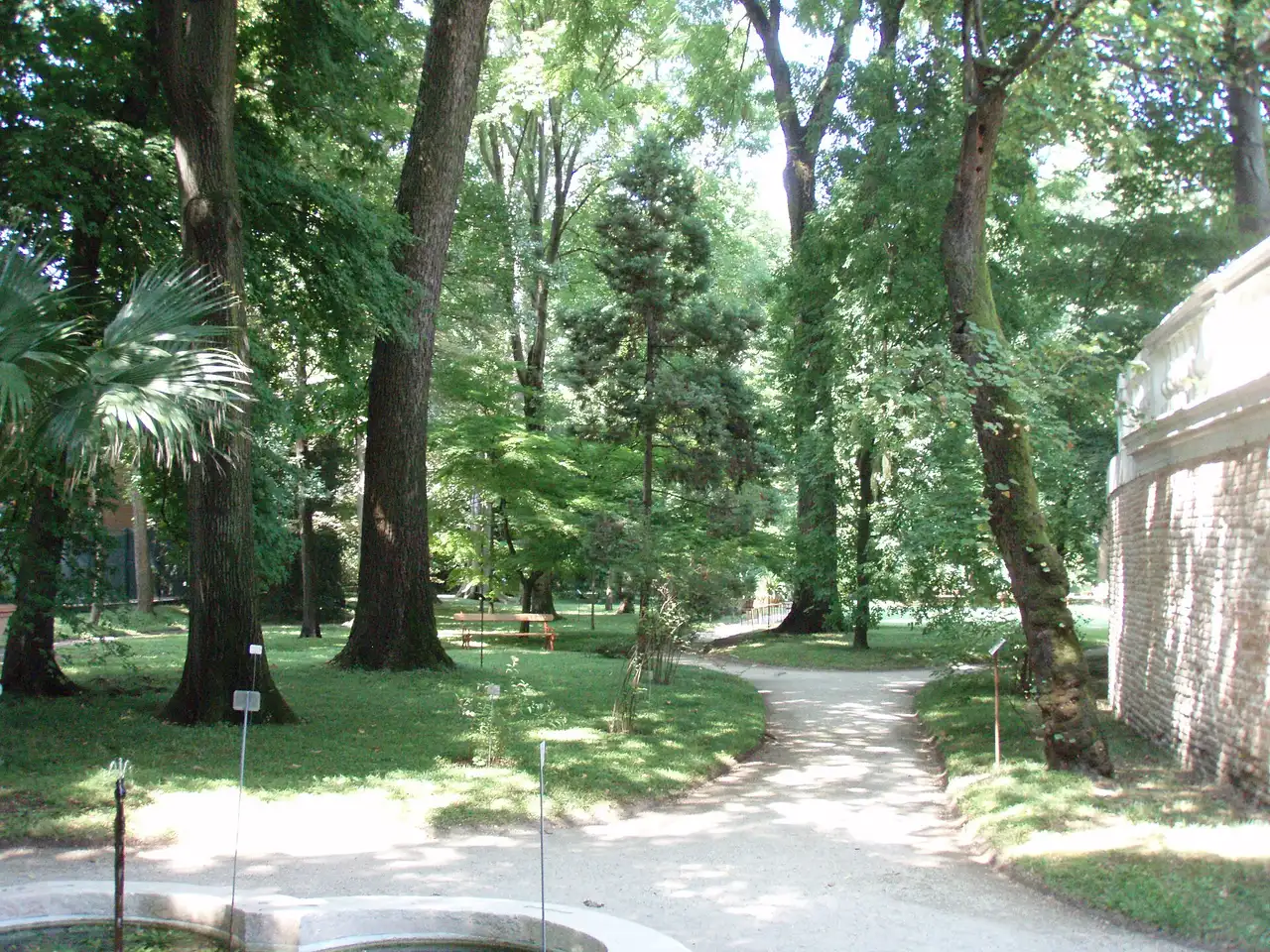
The padua botanical garden — the Orto Botanico dell'Università di Padova — is the world's oldest academic botanical garden still on its original site, created in 1545 so that medical students could study medicinal plants in the flesh rather than in copied manuscripts. UNESCO inscribed it on the World Heritage list in 1997 for exactly that continuity: the round Renaissance plot, the enclosing wall, the sixteenth-century fountain and the teaching mission have never moved or changed purpose. The garden sits between Prato della Valle and the Basilica of Saint Anthony, so it slots naturally into the same southern loop as Prato della Valle, and it is run today by the university's museum network alongside the science sites in the city centre. Expect a working scientific collection of about 3,500 species, an audio guide included in the ticket, and — since the new Biodiversity Garden greenhouses opened — a modern glass complex hidden behind the Renaissance wall. This page lists the current tariffs, hours and visiting order. Everything else in the city starts from the Padua City Guide homepage.
Quick answer 2026 ticket prices, hours, Monday closure and what to see
Checked on 12 September 2026: new tariffs effective 1 September 2026 set the full ticket at €15.00 (€12.00 November-February), with reductions at €10.00 and a €6.00 rate for ages 6-25; children up to 5 enter free and a family ticket (2 adults + up to 3 under-18s) costs €30.00. The garden is open Tuesday-Sunday — April to September 10:00-19:00 — and closed on ordinary Mondays. Every ticket includes the audio guide. Do not skip the round Renaissance plot with Goethe's palm, planted in 1585, or the modern Biodiversity Garden greenhouses. Pair the visit with Prato della Valle next door and the Basilica of Saint Anthony two blocks north.
Key takeaways
- New 2026 tariffs: €15.00 full / €12.00 winter; €10.00/€8.00 reduced; €6.00 ages 6-25; €30.00 family; under-5 free.
- Closed on ordinary Mondays — shift your plan if Monday falls in the middle of your stay.
- Audio guide included in the ticket; guided visits run at fixed weekend times.
- Goethe's palm, planted 1585, still grows in the round plot inside the Renaissance wall.
- The Giardino della Biodiversità greenhouses add about 45 minutes to a standard visit.
Key facts
Opening hours
| April-September | 10:00–19:00 |
|---|---|
| March and October | 10:00–18:00 |
| November-February | 10:00–17:00 |
Closed Closed on ordinary Mondays (open on public-holiday Mondays); 25 December and 1 January; last entry 45 minutes before closing; short maintenance closures in early February have occurred — check the official calendar
Admission
- Adult
- €15.00 full (ages 26-64); €12.00 winter rate November-February (tariffs effective 1 September 2026)
- Reduced
- €10.00 (€8.00 winter): over-65s, teachers, Padua province residents, holders of full tickets for Museo della Natura e dell'Uomo / Palazzo del Bo / Villa Parco Bolasco / Sala dei Giganti, UniPD members; €6.00 for ages 6-25
- Free
- Children up to 5, visitors with disabilities and one carer each
Planning it
- Time needed
- 1.5 to 2 hours
- Book ahead
- Optional — walk-up usually fine
- Address
- Via Orto Botanico 15, 35123 Padova
The world's oldest academic botanical garden, founded 1545
The Senate of the Republic of Venice authorised the city's university — by then nearly three centuries old — to create a public garden for the study of plants with medicinal uses, the so-called simplici that apothecaries and physicians depended on. What made the Padua institution decisive for science was its independence from the book: plants were grown, labelled and compared live, and within decades the garden's network of correspondents was exchanging seeds and specimens across Europe and with the Ottoman world. That early infrastructure of observation is what the 1997 UNESCO citation recognises: the oldest academic botanical garden that has kept its original layout and purpose.
The layout is the first thing you notice. A perfect circle of raised ground, ringed by a wall built to protect valuable plants from night thieves — a real problem when a single bulb could be worth a fortune — with water supplied by the sixteenth-century fountain at its centre. The four avenues divide the circle into quadrants in the old scholastic manner. The wall, the gate piers with their wrought-iron detail and the round form itself survive intact, so a twenty-minute circuit of the original hortus explains the Renaissance idea of order as clearly as any museum panel.
- 1545: the garden is founded by the city's university for teaching medicinal plants.
- 1545-c.1600: circular plot, enclosing wall and the fountain are laid out — the UNESCO core.
- 1585: the Mediterranean palm that Goethe later studies is planted.
- 1997: UNESCO World Heritage inscription as the oldest academic botanical garden on its original site.
- 2014: the Giardino della Biodiversità greenhouses open after an international design competition.
What to see: Goethe's palm, the collections and the greenhouses
Work through the garden in this order: the original circle first, when your attention is freshest; then the botanical museum; then the Biodiversity Garden greenhouses. The whole circuit takes about ninety minutes to two hours with the included audio guide, longer if a guided visit is running.
Goethe's palm and the oldest specimens
The chamaerops humilis near the circle has stood there since 1585 and is the garden's single most cited plant. Goethe, who visited Padua in 1786, drew on the variations he saw in such palms when he later developed his ideas on the metamorphosis of plants — the argument that all plant organs are transformations of a single leaf-form. A plaque marks the specimen.
Around the circle you will also find the oldest surviving planting pockets, the medicinal-plant beds of the orto dei semplici, and the labels that explain the Renaissance classification system.
The Biodiversity Garden greenhouses
Behind the historic wall, and mostly invisible from the street, the modern complex of greenhouses opened in 2014 after an international design competition. Inside, the route descends through climates — from arid to tropical — presenting about 3,500 species collected worldwide and the story of plant evolution that the Renaissance founders could not have written. The cool air conditioning makes it a good late-afternoon stop in July and August, and the elevated walkways give the best view back over the old circular garden.
Orchids, medicinal plants and the botanical museum
The orchid and medicinal-plant collections rotate with the season, so ask at the entrance what is flowering. The botanical museum, inside the garden's buildings, traces how botany and medicine separated over five centuries — herbals, teaching apparatus and herbaria — and is included in the same ticket. Families should note the Audiopen kids audio format in Italian and English, and the rule that visitors under 14 must be accompanied by an adult.
Visiting order and timing
Enter from Via Orto Botanico 15, two minutes' walk from the western curve of Prato della Valle. Pick up the audio guide at the desk, do the circle, the museum, then the greenhouses, and finish at the bookshop. If you only have an hour, do the circle and the greenhouses and skip the museum.
| Area | What you see | Time | Note |
|---|---|---|---|
| The circular hortus (1545) | Renaissance round plot, fountain, wall, oldest beds | 30-40 min | Goethe's palm stands here |
| Botanical museum | Five centuries of botany and medicine | 20-30 min | Included in the ticket |
| Giardino della Biodiversità | Climatic greenhouses, ~3,500 species | 30-45 min | Opened 2014; air-conditioned |
| Orto dei semplici beds | Medicinal and aromatic plantings | 10-15 min | Seasonal labelling |
| Bookshop and exit | Botanical prints, seeds, guides | 5-10 min | Next to the ticket desk |
Ticket categories exactly as published by the university's garden office (ortobotanico1545.it) and effective from 1 September 2026, checked on 12 September 2026. The audio guide is included in every category; no timed slot is required, so you can buy on arrival.
Pay the full ticket at the desk, or use the online portal if you want to skip the queue at 10:00 opening.
| Ticket (from 1 Sept 2026) | Applies to | Price | Where to buy | Book |
|---|---|---|---|---|
| Full ticketAges 26-64 | Ages 26-64 | €15.00 (€12.00 November-February) | Official tickets page | Official site |
| Reduced ticketOver-65s, residents, teachers, Unipd-linked visitors | Over-65s, teachers, Padua province residents, holders of full tickets for Palazzo del Bo / MNU / Villa Parco Bolasco / Sala dei Giganti, UniPD members | €10.00 (€8.00 November-February) | Official tickets page | Official site |
| Youth ticketAges 6-25 | Ages 6-25 (under-14s accompanied) | €6.00 | Official tickets page | Official site |
| Family ticketFamilies | Two adults with up to three under-18s | €30.00 | Official tickets page | Official site |
| Guided city walk including the garden's districtVisitors who want context while walking | See tour card for departure times | See tour card | Check Availability | Check Availability |
| Padua day tour covering the southern sightsHalf-day travellers | See tour card | See tour card | Check Availability | Check Availability |
Botanical garden and the university science sites compared
All figures below come from the operators' own pages — ortobotanico1545.it, unipd.it and visitmnu.it — and were checked on 12 September 2026. The three sites are linked by the Padova Città della Scienza combined ticket if you want to do more than one.
| Site | Full / reduced price | Time needed | Closing day |
|---|---|---|---|
| Orto Botanico (this page) | €15.00 / €10.00 (€12.00/€8.00 in winter) | 1.5-2 hours | Ordinary Mondays |
| Palazzo Bo tours | €10.00 / €8.00 (€6.00 ages 6-25, €25.00 family) | 45-minute guided tour | 24, 25, 31 December, 1 January; weekdays guided-only |
| Museo della Natura e dell'Uomo | €12.00 / €8.00 (€6.00 youth, €25.00 family) | 1.5-2 hours | Ordinary Mondays |
| Padova Città della Scienza combo | €30.00 for all three sites, 6-month validity (€60.00 family) | Half a day | Follows each site's calendar |
The circular hortus of 1545 with its Renaissance fountain, the core of the UNESCO inscription.
Botanical garden on the map
The garden occupies the block between Prato della Valle and the Basilica of Saint Anthony. The pins cover the entrance, the two squares you will walk through, and the neighbouring church and abbey.
Guided tours that cover the botanical garden
The garden itself runs its own weekend guided visits, but these catalogue departures also give you the district and its stories with a city-licensed guide.
 from $69.61
Padua: Small-group walking tour with the Scrovegni Chapel
Best value: the slot and the fresco context in one booking
Check Availability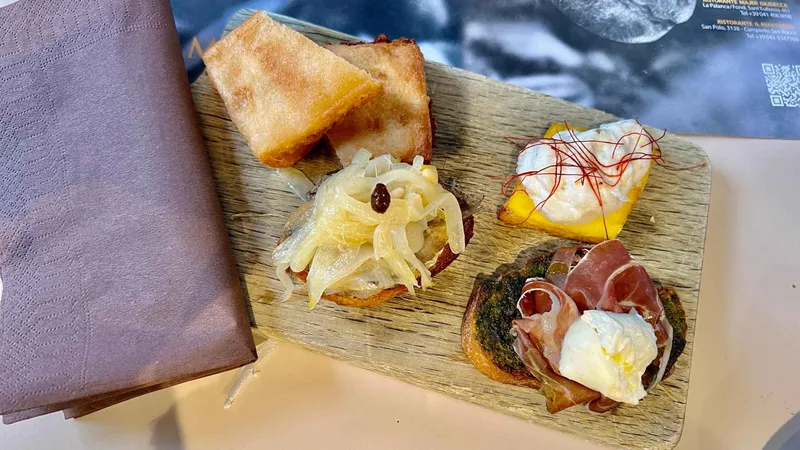 from $290.05
Padua: Food and Culture Walking Tour with Tastings
The private, appetite-first version of the food tour
Check AvailabilityPrices, ratings and details are the platform's own, checked in Q3 2026; dollar figures are the listed prices — the platform bills in your account's currency.
Frequently asked questions about the Padua botanical garden
How much are botanical garden padua tickets in 2026?
From 1 September 2026 the full ticket is €15.00 (€12.00 in November-February), reduced €10.00 (€8.00 winter), ages 6-25 €6.00, family ticket €30.00, and children up to 5 free. The audio guide is included in every category.
Is the garden closed on Mondays?
Yes, on ordinary Mondays it is closed, and it opens on Mondays that are public holidays. It also closes on 25 December and 1 January, and short maintenance closures have happened in early February — check the official calendar before a winter visit.
What are the opening hours by season?
April to September 10:00-19:00 (last entry 18:15); March and October 10:00-18:00 (October drops to 10:00-17:00 in late October); November to February 10:00-17:00 (last entry 16:15).
Is the audio guide really included in the ticket?
Yes — the garden advertises self-guided visiting with the audio guide included, and there is an Audiopen kids format for children. Fixed-departure guided visits run mainly on weekends and holidays; the schedule is posted on the official site.
How long does a visit take, and can I combine it with Prato della Valle?
Plan 1.5 to 2 hours. The entrance on Via Orto Botanico 15 is a two-minute walk from the western edge of Prato della Valle, and the abbey of Santa Giustina is on the square's southern side — the three form one loop.
Is the garden suitable for children?
Yes, with two caveats: visitors under 14 must be accompanied by an adult, and the greenhouses' walkways are stroller-friendly but the historic circle is gravel. The kids' audio track and the greenhouses' animals-and-climates section are the usual hits.
Does the Padova Card cover the botanical garden?
The civic Padova Card covers the city's civic museums and is a different product from the university's Padova Città della Scienza combo, which covers the botanical garden, Palazzo del Bo and the Museo della Natura e dell'Uomo for €30.00 over six months. Compare both before buying — see is Padua Card worth it.
What to visit near the botanical garden
The garden sits inside Padua's southern sightseeing cluster — nothing on this list is more than ten minutes away:
Prato della Valle
Italy's largest square, with its canal ring and 78 statues, two minutes west.
Basilica of Saint Anthony
The pilgrimage basilica with Donatello bronzes, five minutes north.
Abbey of Santa Giustina
The vast Benedictine abbey church beside Prato della Valle, free entry.
Colli Euganei
Volcanic hills and spas south of the city — the natural half-day add-on.
Padua with kids
Family-focused planning, including the greenhouses and the kids' audio guide.
Reviewed Q3 2026 (July–September 2026); next review Q4 2026. Prices, hours and terms are set by the venue or operator and confirmed at checkout.
We may earn a commission if you book through one of our links, at no extra cost to you. Full affiliate disclosure