 Padua City Guide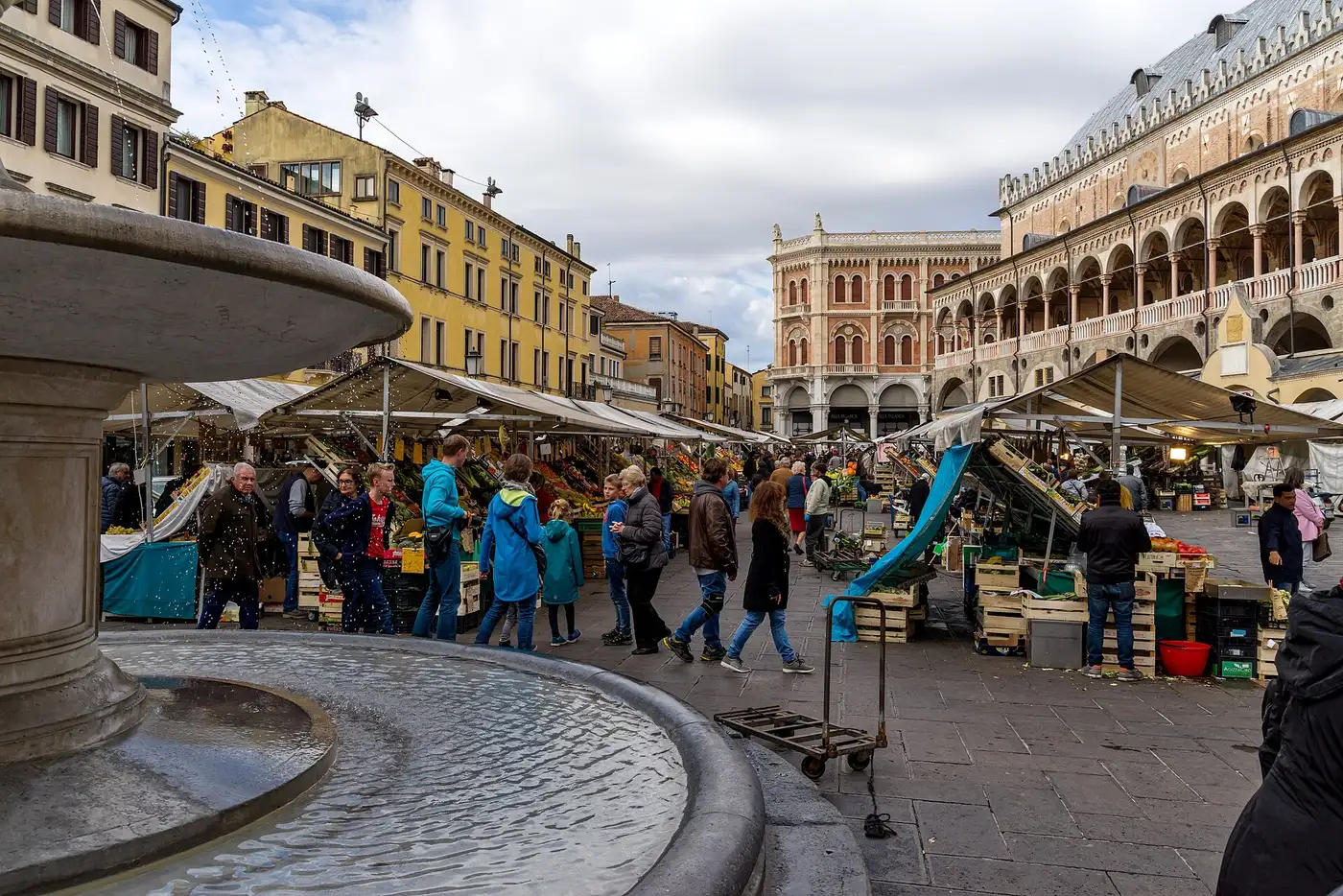
Honest padua costs run well below Venice's and below Verona's, and this page puts numbers on the difference instead of adjectives: what a shoestring, mid-range and comfortable day actually total, every major ticket price at its 2026 figure, what the coffee, cichetti and dinner bills look like, and the small print — the coperto line, tipping habits, and where cards stop working. The city's tourist economy is a university city's economy: market lunches cost market prices, the counters price for students, and the single biggest line is whichever interior you book first. Every figure below was checked on 12 September 2026 against the operators' own tariffs and the observed ranges of the city's bars and trattorie. The full planning directory sits on the Padua City Guide homepage.
Quick answer The three daily tiers, and the two fixed prices that shape them
Checked on 12 September 2026: a shoestring day runs about €55-75 per person with a station-side or budget room, market lunches and counter meals; a mid-range day lands around €110-160 with a central room, one paid interior and a sit-down dinner; a comfortable day reaches €180-300 with higher-category rooms, tours and taxis. The big fixed prices are the chapel's €16 combined ticket and the Urbs Picta Card at €28 for 48 hours — the full ledger is the table below, and the pass arithmetic is on Padua Card.
Key takeaways
- Shoestring €55-75: budget room, market lunch, counter dinners, walking everywhere.
- Mid-range €110-160: central room, two interiors, a bacaro evening and a trattoria dinner.
- Comfortable €180-300: high-season central room, tours, taxis and the best tables.
- Coffee at the counter costs €1.20-1.50; the same coffee at a table adds a service premium.
- Carry some cash: market stalls, small bacari and tabacchi bus tickets do not all take cards.
The daily budget tiers: what each level buys
The tiers below are per person per day in a double room occupied by two, built from the operators' published 2026 tariffs for tickets and the observed room and meal ranges checked on 12 September 2026; high-season dates and event weekends push the top of every band.
| Cost line | Shoestring (€55-75) | Mid-range (€110-160) | Comfortable (€180-300) |
|---|---|---|---|
| Lodging | €35-50 — station-side or budget room, half of a double | €70-100 — central double in the honest band, half | €120-200 — high-season centre or better categories |
| Food and drink | €15-20 — market lunch, two counter meals | €35-55 — bacaro crawl, sit-down dinner, coffees | €60-100 — booked tables, wine with dinner, cafe rituals |
| Tickets | €0-16 — the chapel slot or one interior, the free circuit otherwise | €16-30 — chapel plus one or two museums | €30-60 — the pass, tours, or every interior on the list |
| Transit and extras | €0-3 — walking, one bus at most | €3-10 — buses, a taxi hop | €10-30 — taxis, luggage services, extras |
The attraction price ledger, checked on 12 September 2026 against each operator's own site. Reduced categories vary by operator; the chapel's reduced tier and the garden's winter tariff are the two that most visitors use. Every row links the operator's own, unparametered page.
Count your interiors first: three or more paid sites make the Urbs Picta Card (€28 for 48 hours) worth pricing before you buy anything at the door.
| Attraction | Ticket | Price | Official source | Book |
|---|---|---|---|---|
| Scrovegni ChapelEvery first visit | Combined timed slot: chapel, Eremitani and Zuckermann | €16 (€15 entry plus €1 booking); reduced €11 | Official chapel site | Official site |
| Palazzo della RagioneThe market-square stop | The Salone's painted hall, Tue-Sun | €8 | Padova Musei | Official site |
| Baptistery and Diocesan MuseumFresco lovers | Combined ticket for the frescoed dome and the collections | €15 | Diocesan Museum | Official site |
| Orto BotanicoGarden and greenhouse visitors | The UNESCO garden and the Biodiversity greenhouses | €15; €12 in winter (November-February); closed ordinary Mondays | Official garden site | Official site |
| Palazzo Bo guided tourUniversity visitors | Weekday guided visit of about 45 minutes | €10, booked ahead in term time | University of Padua | Official site |
| Caffè Pedrocchi museumThe cafe ritual | The Risorgimento floor; the cafe's ground floor is free | €5 | Caffè Pedrocchi | Official site |
| Basilica of Saint AnthonyThe basilica quarter | Basilica entry is free; the museum is ticketed | Museum €10 | Basilica of Saint Anthony | Official site |
| Torre dell'OrologioThe clock-tower climb | The astronomical clock's mechanics and the roof view | Free by donation; fixed times | Padova Musei | Official site |
| Urbs Picta CardMulti-museum itineraries | The civic circuit including the chapel slot (still booked) | 48h €28 / 72h €35 | Turismo Padova | Official site |
| MUSMEFamilies and rainy days | The museum of the history of medicine, interactive throughout | €12 | MUSME | Official site |
Food and drink: what the bills actually look like
Padua's food economy is the friendliest part of its cost structure, and the reason is structural: a city of tens of thousands of students prices its counters for people without subsidies. At the bar, an espresso drunk standing at the counter (al banco) runs €1.20-1.50; the same espresso at a table can double, and a seated cappuccino with service lands at €2-3. Lunch is where the city is kindest — a market lunch from the stalls and bars around the Salone costs €5-10 and is a meal, not a snack. In the evening the bacari system keeps prices fractional: cichetti, the small plates that anchor the ritual, cost €1.50-4 each, and a spritz runs €4-6, so a two-person evening of grazing lands comfortably under a restaurant bill.
At dinner, the coperto — the cover charge Italian trattorie add per person for bread and table service — runs €1.50-3 in Padua, and it is not a scam: it is a printed line on the menu, distinct from a service charge. A full trattoria dinner with a first course, a second, water and wine lands at €20-35 per head in the ordinary neighbourhoods, more in the square-side rooms. The dishes themselves are priced on the traditional Paduan food page, and the counter ritual in cichetti and bacari.
Common bills at a glance
The seven bills that make up almost every food transaction a visitor has, from morning coffee to the evening crawl.
| Bill | Typical range | Where |
|---|---|---|
| Espresso al banco | €1.20-1.50 | Any bar counter, morning to night |
| Seated cappuccino | €2-3 | Table service adds the premium |
| Market lunch | €5-10 | The stalls and bars around the Salone |
| Cichetto | €1.50-4 each | Bacari counters, evenings |
| Spritz | €4-6 | Bacari and square-side tables |
| Coperto | €1.50-3 per person | Trattorie and osterie, printed on the menu |
| Trattoria dinner | €20-35 per head | First course, second, water and wine |
Coperto, tipping and card versus cash
Three habits cover almost every money question visitors ask. Tipping in Padua is modest by design: service is included in the menu prices, the coperto covers the table, and locals round up the bill or leave a euro or two for good service — 10-15 per cent is generous rather than expected, and nobody will chase you for it.
Cards and contactless work in hotels, museums, most restaurants and the larger bacari; the honest rule is to carry €30-50 in cash for the edges of the economy: market stalls, the smallest counters, bus tickets bought at tabacchi, and the odd bar that posts a card minimum. ATMs (bancomat) cluster around the piazze and the station; use bank-attached machines rather than the free-standing ones on tourist streets. And keep the small coins: the €1-2 range is where the city's daily life — coffee, cichetti, bus tickets — actually transacts.
- Tip by rounding up or leaving €1-2; 10-15 per cent is the generous ceiling.
- Carry €30-50 in cash for markets, small counters and tabacchi tickets.
- Use bank-attached ATMs; decline the free-standing machines on tourist streets.
- Check the menu's coperto line before sitting — €1.50-3 is normal; silence about service is not.
Tourist prices, the Monday caveat and the budget calendar
Two prices coexist in the centre. The tourist premium is real — square-side tables, table-service coffee, the uplift that a view of the Salone carries — but it is a premium you choose by sitting down, not a tax you cannot escape: the same spritz costs less two streets back, and the counter price applies to everyone. Order al banco and the student economy prices you in.
The Monday caveat has a money edge too. The civic circuit — the Salone, the Pedrocchi museum, the botanical garden — closes on ordinary Mondays, and the Baptistery opens only from 14:00; buying a 48-hour pass or a round of door tickets without checking the calendar is the single most common way to waste money in this city. Run the one-day itinerary logic before spending: put the interiors on Tuesday to Sunday, give Monday the free circuit, and the ticket budget survives intact.
The budget calendar is simple: November to February is when rooms sit nearest the floor and the garden's winter tariff applies; April to June and September book out and price highest; August thins the crowds but closes some family-run kitchens for the ferie. The seasonal detail is on the best time to visit page.
The money calendar
How the city's prices move through the year, and the saving move that fits each window.
| Period | What moves | The saving move |
|---|---|---|
| November-February | Room rates near the floor; the garden at €12 | Travel midweek; mind the museum Mondays |
| March and late October | Shoulder rates, thinner queues | Book central rooms 2-3 weeks out |
| April-June | Peak demand; June weekends price first | Reserve rooms and the chapel slot weeks ahead |
| July-August | Hot and humid; ferie closures mid-August | Chase the counter prices; check August kitchen closures |
| September | Peak prices, the best weather | Book everything early; the evenings on the squares are free |
Frequently asked questions about Padua costs
Is Padua expensive compared with Venice?
No, and the gap is wide: a market lunch costs €5-10 against the lagoon's sit-down prices, nightly bands run €70-90 at the floor against Venice's multiples of that, and the biggest ticket in the city is a €16 chapel entry. The full comparison of daily totals is the tier table above.
How much should a day of sightseeing cost?
Tickets are the smallest line: the chapel's €16 combined slot is the ceiling for most days, the Salone is €8, and the clock tower is free by donation. A full interiors day stays under €45 per person even without the pass — the ledger above lists every price.
Do I need cash in Padua?
For the edges: market stalls, the smallest bacari counters, tabacchi bus tickets and the odd card-minimum bar. Hotels, museums and most restaurants take cards and contactless. Carry €30-50 and the city runs smoothly; the getting around guide notes where the tabacchi rule bites.
What is the coperto on my restaurant bill?
The cover charge — €1.50-3 per person in Padua — for bread and table service. It is printed on the menu, it is legal, and it is not a tip: service is already included. A separate service-charge line would be unusual in an ordinary trattoria.
Should I tip, and how much?
Modestly. Round up the bill or leave a euro or two; 10-15 per cent is generous. Nobody expects the American percentage, and the coperto is not part of any tip.
Which months are cheapest for a stay?
November to February, when rooms sit nearest the €70-90 floor and the botanical garden drops to its €12 winter tariff. The trade-offs — shorter days and the museum Mondays — are set out on the best time to visit page.
Is the 48-hour city pass worth the money?
Only if your interior count is high: the card costs €28 for 48 hours and €35 for 72, and the door prices on this page let you add up your own list before buying. The worked examples sit on Padua Card and in the two-day itinerary's arithmetic.
The pages that finish the money picture
Four guides pair with the ledger above, plus the planning directory:
Best time to visit
When the floor and ceiling prices fall, month by month.
Where to stay
The nightly bands the lodging line sits inside, area by area.
Padua Card
The pass arithmetic against the door prices on this page.
Cichetti and bacari
How the €1.50-4 counter ritual works, plate by plate.
Plan hub
Every itinerary and logistics guide in one directory.
The market economy that keeps budgets honest — fruit stalls under the great medieval hall, where €5-10 still buys a proper lunch.
Reviewed Q3 2026 (July–September 2026); next review Q4 2026. Prices, hours and terms are set by the venue or operator and confirmed at checkout.
We may earn a commission if you book through one of our links, at no extra cost to you. Full affiliate disclosure