 Padua City Guide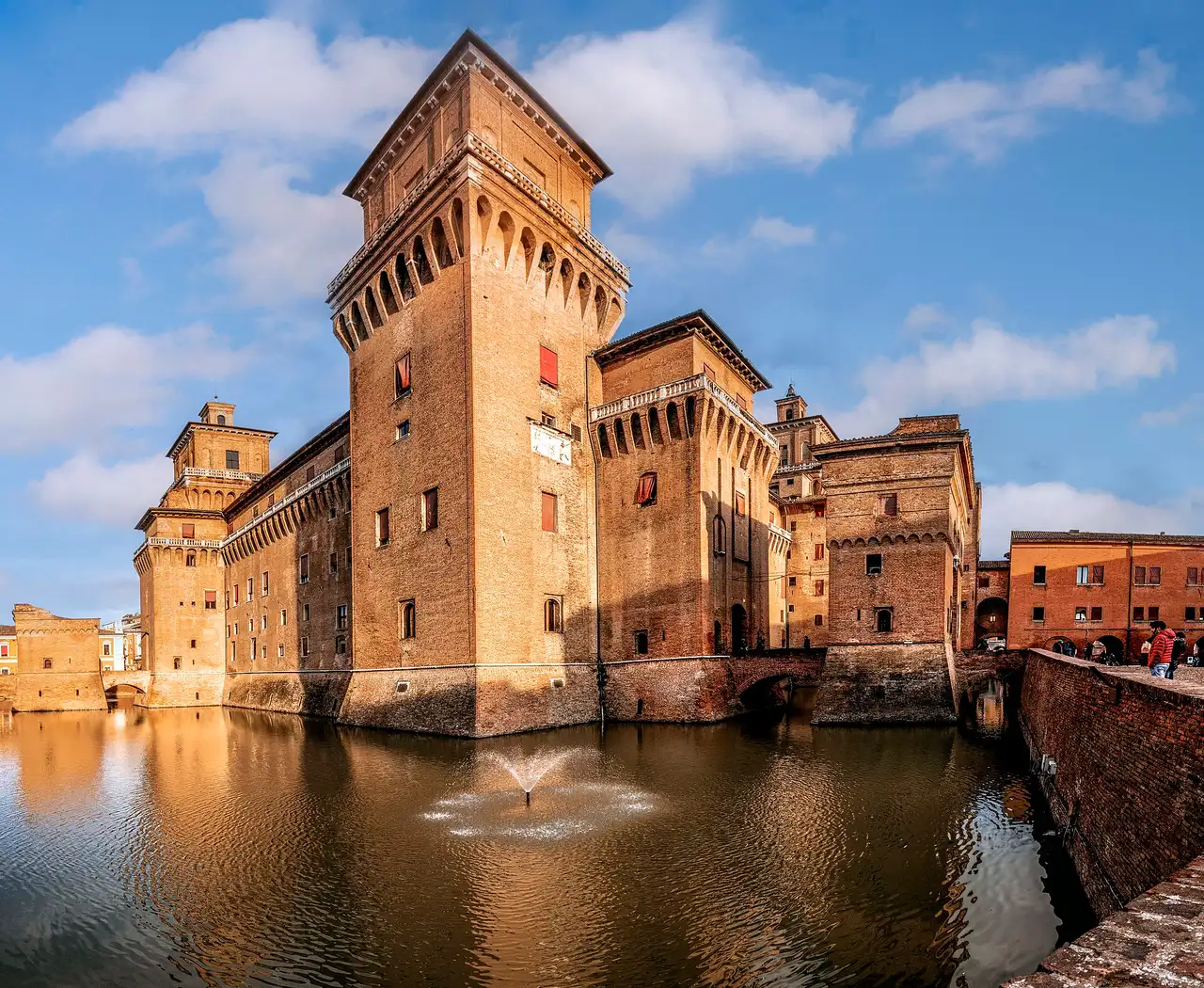
The ferrara day trip is the connoisseur's choice on the Padua rail map: a direct regional train covers the journey in about an hour, the station sits a five-minute ride from a historic centre UNESCO listed in 1995, and the city hands you a bicycle-shaped invitation the moment you arrive. Ferrara is what Renaissance ambition looks like when the crowds go elsewhere — a moated brick castle with four crenellated towers at its heart, a cathedral square that still functions as the town's living room, the arched overpasses of Via delle Volte, a diamond-block palace, and nine kilometres of tree-topped city walls that you cycle for free, the best urban ride in Emilia-Romagna. The Este court that built all of this ran one of Italy's great Renaissance governments from this plain between the Po and the coast. This page covers the train and the bike logic, the castle and the court, and the walls-and-lanes circuit, with a straight comparison against the bigger city days. The rest of the directory — and the city you start from — sits on the Padua City Guide homepage.
Quick answer The train, the castle hours, the walls ride and costs
Checked on 12 September 2026: Padua to Ferrara is about an hour by direct regional train, no reservation. The Castello Estense — moated, four-towered, seat of the Este court — opens with its ticket office 10:00-18:00 (closed Tuesdays) for around €9, confirm on the official site. The city walls run 9 km and are free to cycle; hire a bike by the station or bring one on the regional. Via delle Volte and Palazzo dei Diamanti fill the rest. Guided wine vans head to the prosecco and Euganean hills instead — see padua tours.
Key takeaways
- About an hour by direct regional train — the same line that serves the slow Bologna route.
- Castello Estense: ticket office 10:00-18:00, closed Tuesdays, around €9 — confirm.
- The 9 km of city walls are free and flat — the best urban bike loop in the region.
- UNESCO 1995: the Este city and its Po delta lands, listed as an ideal Renaissance town plan.
- Bikes travel on regional trains — the return trip can start with a wall ride.
Key facts
Opening hours
| Regional trains Padova → Ferrara (daily, direct) | about an hour each way, service through the day–evening returns — check the last regional before dinner |
|---|---|
| Castello Estense ticket office | 10:00–18:00 (sales stop 45 minutes before close) |
Closed Castello Estense ticket office closed Tuesdays; the walls, streets and church squares are open every day
Admission
- Adult
- Regional train a moderate fixed fare; Castello Estense around €9 — confirm on the official site; bike hire a few euros an hour
- Reduced
- Castle reductions for over-65s, students and EU teachers per the official tariff page
- Free
- Cycling the 9 km of city walls, Via delle Volte, the cathedral square and Piazza Ariostea
Planning it
- Time needed
- 7-9 hours
- Book ahead
- Optional — walk-up usually fine
- Address
- Largo Castello, 44121 Ferrara
About an hour by regional train — and bring a bike
Ferrara sits south-west of Padua on the same corridor the slow trains use toward Bologna, and the direct regional covers it in about an hour on a fixed fare with open seating — no reservation, no fare games, just the standard validate-before-boarding rule. The station lies on the northern edge of town, five minutes by bike or fifteen on foot from the castle's moat, and the flatness that defines the Po plain defines the day: this is a city built to be ridden, not driven.
The bike logic has three layers. First, regional trains allow bicycles on the designated spaces, so you can carry one from Padua and have wheels from the platform. Second, hire shops cluster around the station and the centre, renting for a few euros an hour — the low-commitment option that suits a one-day visit best. Third, the city's signature ride is the wall circuit: nine kilometres of tree-shaded rampart, free, flat, and stitched with viewpoints over the surrounding walls-hugging parkland, doable in a leisurely hour. The combination — train in, hire out, castle at midday, walls at golden hour — is the whole trip in one sentence, and it costs less than any other day on this map.
- Direct regional train, about an hour, fixed fare, no reservation — validate before boarding.
- Station to castle: five minutes by bike, fifteen on foot.
- Bikes travel on regional trains (designated spaces); hire runs a few euros an hour by the station.
- City walls: 9 km, free, flat, best ridden late afternoon.
- Same line as the slow Bologna service — a Ferrara stopover can anchor a combined day.
Castello Estense and the Este court
The Castello Estense is the reason to plan the day around Ferrara at all: a square brick fortress of 1385, fully surrounded by its moat, with four crenellated towers and a raised walkway that lets you circuit the walls of the courtyard the way the Este garrison once did. It was built as a reaction — after a bread riot threatened the court, Niccolò II d'Este ordered a fortress beside the palace — and it grew into the dynastic seat of one of Renaissance Italy's most cultivated governments: the court of Borso and Ercole I d'Este employed the poets, painters and musicians whose names fill the period's index, and the marriage of Alfonso I to Lucrezia Borgia tied Ferrara into the era's most infamous family web. Entry runs around €9 (confirm on the official site), the visit covers the apartments, the prisons where two Este wives were walled up in the sixteenth century, and the rooftop terraces over the moat.
Two minutes away, the cathedral front rises over the Piazza Trento e Trieste — a Romanesque-Gothic facade with a last-judgement porch carved in the twelfth and thirteenth centuries, facing a square that still hosts Ferrara's market and its evening promenade. The court's hold on the town is the theme everywhere you look: the Este controlled not just the castle but the plan of the city itself, and the Este hand on the street plan is still legible in every walk that follows.
The moated castle in practice
Budget 60-90 minutes inside. The route runs through the ground-floor halls, up the ramparts, past the Garden of the Oranges and the prison cells — the Marco Polo and Pico dell'Mirandola connections are marketing, but the two walled-up Este wives (Parisina and Giulia) are genuine castle history. The ticket office keeps 10:00-18:00 hours and closes Tuesdays; walk-up sales are the norm outside holiday weeks.
Cathedral square and the town's rhythm
Piazza Trento e Trieste — still called Piazza Cattedrale by most ferraresi — carries the market stalls in the morning and the passeggiata in the evening, with the Duomo's marble porch and loggia above. Coffee in the square, a look inside the cathedral (free), and the short walk south into the medieval quarter keeps the morning honest before the walls ride.
Walls, Via delle Volte and Palazzo dei Diamanti
Ferrara's UNESCO inscription of 1995 recognises something structural: the city is one of the earliest and clearest examples of Renaissance town planning, and its walls enclose the plan intact. The walls themselves — nine kilometres of earth and brick rampart, greened with a park on both faces — survived as public space rather than a monument, which is why the cycling loop costs nothing and feels like the city's own daily exercise circuit. Ride it clockwise in the late afternoon, when the long light runs down the tree lines, and you will have the best hour of the day for the price of a bike rental.
Inside the circuit, two streets carry the medieval and Renaissance story respectively. Via delle Volte is the old merchants' lane along the former Po branch: a kilometre of arched overpasses connecting warehouse to riverbank, squeezed and shadowed and entirely free. And the Erculean Addition — the district Duke Ercole I laid out from 1492 across the northern fields, planned by the architect Biagio Rossetti — is Europe's first great modern urban extension, its axis marked by Palazzo dei Diamanti, the palace faced with 8,500-odd marble blocks cut as diamonds, today the city's exhibition hall with a paid, rotating programme. The table below lines up the six stops a first visit should touch.
Ferrara in six stops
A practical order that keeps the castle for midday and the walls for the low sun:
| Stop | What | Time | Cost |
|---|---|---|---|
| Castello Estense | Moated Este fortress, prisons and ramparts | 60-90 min | ~€9 — confirm |
| Duomo and Piazza Trento e Trieste | Romanesque-Gothic facade over the market square | 30 min | Free |
| Via delle Volte | Arched merchants' overpasses along the old river street | 20-30 min | Free |
| City walls by bike | 9 km green rampart circuit | 60-75 min | Free (bike hire a few euros/hour) |
| Palazzo dei Diamanti | Diamond-block facade and exhibition programme | 30-60 min | Paid per exhibition |
| Piazza Ariostea | The arcade-ringed square of the Palio horse race | 15 min | Free |
What Ferrara offers that the bigger cities do not
This is a character comparison rather than a price table; the structural facts — UNESCO dates, wall length, transit times — come from the sources above and were checked on 12 September 2026. The links open each rival's planning page.
| City | Pace | Signature sight | Why choose it instead |
|---|---|---|---|
| Ferrara | Slow, flat, bike-first | A moated brick castle inside 9 km of free walls | Renaissance streets without queues — the day feels empty in the best way |
| Bologna | Busy university energy | Towers, porticoes and food lanes | Choose Bologna for food and buzz; Ferrara for air and space |
| Verona | Tourist-current by midday | The Roman arena | Choose Verona for spectacle; Ferrara for silence |
| Venice | Crowd-managed all day | Canals and the basilica | Ferrara is the quiet counterweight after a lagoon day |
Official rows first: the castle's own box-office site and the rail operator, checked on 12 September 2026. The tour rows carry the standing note — GetYourGuide runs no Ferrara departures from Padua; its wine vans head to the prosecco and Euganean hills instead, and Ferrara needs none of them.
Train, bike, castle: book nothing but the fast train home if you want one.
| Option | Where | Price | Action | Book |
|---|---|---|---|---|
| Castello Estense entry and toursThe anchor visit | Largo Castello box office — 10:00-18:00, closed Tuesdays | Around €9 — confirm on the official site | Official castle site | Official site |
| Regional trains Padova → FerraraEveryone | Padova Centrale | Fixed regional fare, about an hour | Trenitalia timetables | Official site |
| Panoramic Prosecco Tasting Tour from PaduaA wine day instead | Full day in Valdobbiadene and Conegliano — not a Ferrara trip | See tour card | Check Availability | Check Availability |
| Winery Tour & Tasting on the Padua HillsShort tastings | About 1h15 in the hills near Padua | See tour card | Check Availability | Check Availability |
The Castello Estense across its moat — built after the 1385 bread riot, home to the Este court for two centuries.
Ferrara on the map: castle, lanes and walls
The pins trace the day: arrival in the north, the castle and square at the centre, the medieval lane and the diamond palace, and the green ring of walls that closes the loop.
Wine-country tours from Padua — the honest note
GetYourGuide runs no Ferrara departures from Padua, and none are needed: the train, a hired bike and the castle desk cover everything a day can hold. If the plan wants a wine day instead, the catalogue's vans head to the prosecco hills and the Euganean wineries near Padua. Cards sit in padua tours:
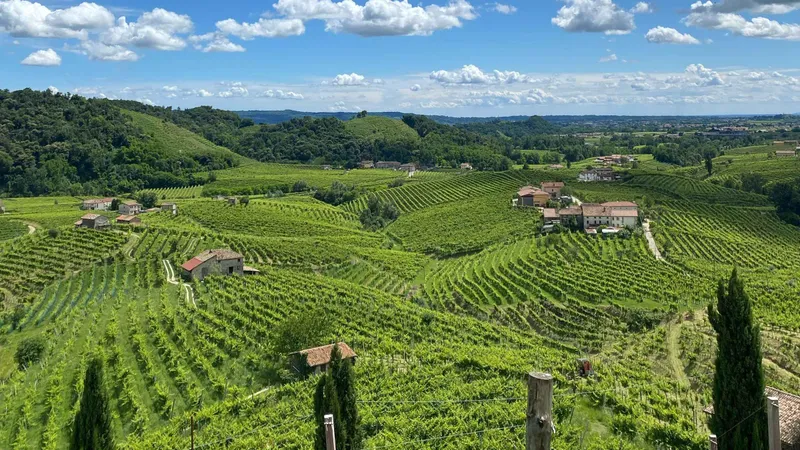 from $208.84
Panoramic Prosecco Tasting Tour From Padua
The DOCG hills day: osteria tasting, cellar tasting, the mill stop
Check Availability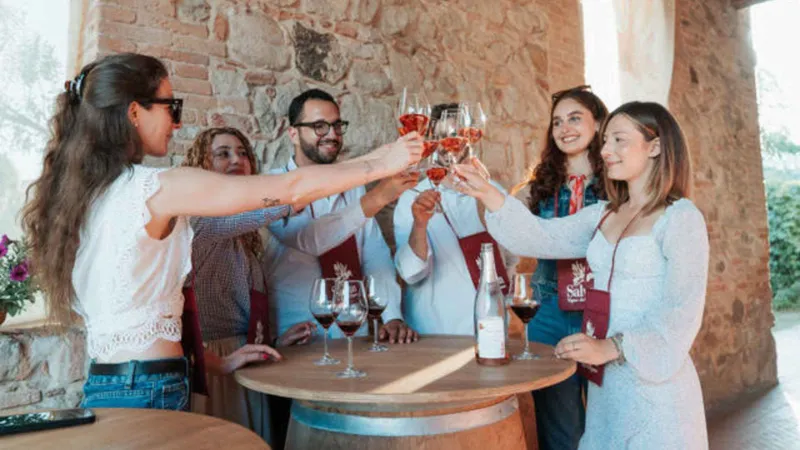 from $63.81
Winery Tour & Tasting in the Padua Hills
Seven volcanic-terroir wines in one sitting — the strongest-rated hill option
Check AvailabilityPrices, ratings and details are the platform's own, checked in Q3 2026; dollar figures are the listed prices — the platform bills in your account's currency.
Frequently asked questions about the Ferrara day trip
How long is the train, and is it direct?
Direct regional trains cover the run in about an hour on a fixed fare, with no reservation — the same corridor as the slow service toward Bologna. Check the last evening return before booking a late dinner; the frequency thins after the evening peak.
Can I take a bike on the regional train?
Yes — regional trains carry bikes in designated spaces for a small supplement, and the Padua-Ferrara run is a standard bike route. The alternative is hiring at the station for a few euros an hour; for a one-day visit that is usually the lighter option, and the hire shops sit beside the forecourt.
How long does the wall loop take?
The full nine-kilometre circuit rides in a leisurely 60-75 minutes with photo stops, flat the whole way. Late afternoon is the sweet spot — the ramparts catch long light over the parkland — and the surface is packed earth and gravel, so town bikes handle it fine.
Does the castle close any weekday?
Yes — the Castello Estense ticket office keeps 10:00-18:00 hours and closes on Tuesdays, with sales stopping 45 minutes before closing. The walls, the lanes and the squares remain open as ever, so a Tuesday trip still works if the castle is not the priority — but most plans should start from a non-Tuesday.
Is Ferrara doable with children?
It is arguably the best children's day on this map: the walls ride is traffic-free, the castle's moat and ramparts are inherently explorable, and the distances are short. The family-planning angle — pacing, playgrounds and the quieter sights — sits on the padua with kids page.
What makes the city UNESCO-listed?
The 1995 inscription covers Ferrara as the Este capital and its Po delta lands: a city whose Renaissance town plan — especially the Erculean Addition of 1492, Europe's first great planned urban extension — survives intact inside walls that never had to expand. The diamond palace marks the head of that planned axis.
Should I choose Ferrara or the fast train to Bologna?
Choose Bologna for food intensity, towers and buzz; choose Ferrara for air, space and a bike day that costs a fraction of either. The comparison table above lines them up — and the honest hybrid is the regional return from Bologna with a Ferrara stopover, which both pages support.
What to pair with the Ferrara run
Ferrara shares its corridor and its contrasts with three other trips, plus the long-stay plan that fits everything:
Bologna
The fast-train city south — towers, porticoes and the food lanes, on the same corridor.
Colli Euganei
The wine-and-spa hills south of Padua — the other quiet, low-cost day.
Getting around Padua
Validation and station mechanics, including the bike-on-train rules.
Padua in 3 days
The three-day plan with room for two rail trips and the hills.
Reviewed Q3 2026 (July–September 2026); next review Q4 2026. Prices, hours and terms are set by the venue or operator and confirmed at checkout.
We may earn a commission if you book through one of our links, at no extra cost to you. Full affiliate disclosure